Ranch Saddle Guide
Understanding Ranch Saddles: Competition & Working
A Brief History
The ranch saddle is the direct descendant of the vaquero traditions that moved north from Mexico into California, Texas, and the Great Plains during the 18th and 19th centuries. Spanish missionaries and their skilled horsemen brought with them a deep seat, a high fork and cantle, and a sturdy horn built to dally a rope — all design principles that survive in ranch saddles today. As cattle ranching spread across the American West, saddlemakers from Texas, Colorado, and California refined those Spanish roots into distinct regional styles: the slick-fork Texas tree, the swell-fork buckaroo saddle of the Great Basin, the center-fire rig of California, the full-double of the working cow country. By the late 1800s, the saddle had become both a working tool and a point of regional pride — men spent serious money on quality leather and hand-carved floral tooling when their livelihood depended on sitting in that seat ten hours a day.
The 20th century introduced organized competition — rodeo, then breed associations — and with it came the first bifurcation in ranch saddle design. Makers began building saddles tuned for the show pen while working outfits kept demanding saddles built for rough country and hard use. That split is as sharp today as it has ever been, and it is the single most important thing to understand before you buy.
Competition Ranch Saddles: AQHA Ranch Riding & Ranch Horse Events
AQHA Ranch Riding, Ranch Trail, Ranch Cutting, Ranch Reining, and Ranch Cow Work are the fastest-growing classes in the Quarter Horse show world. The rules require a working appearance — no silver, no padded seats, no excessive show finish — but within that framework the competition saddle has evolved into a specialized piece of equipment built for the judge's eye as much as for function.
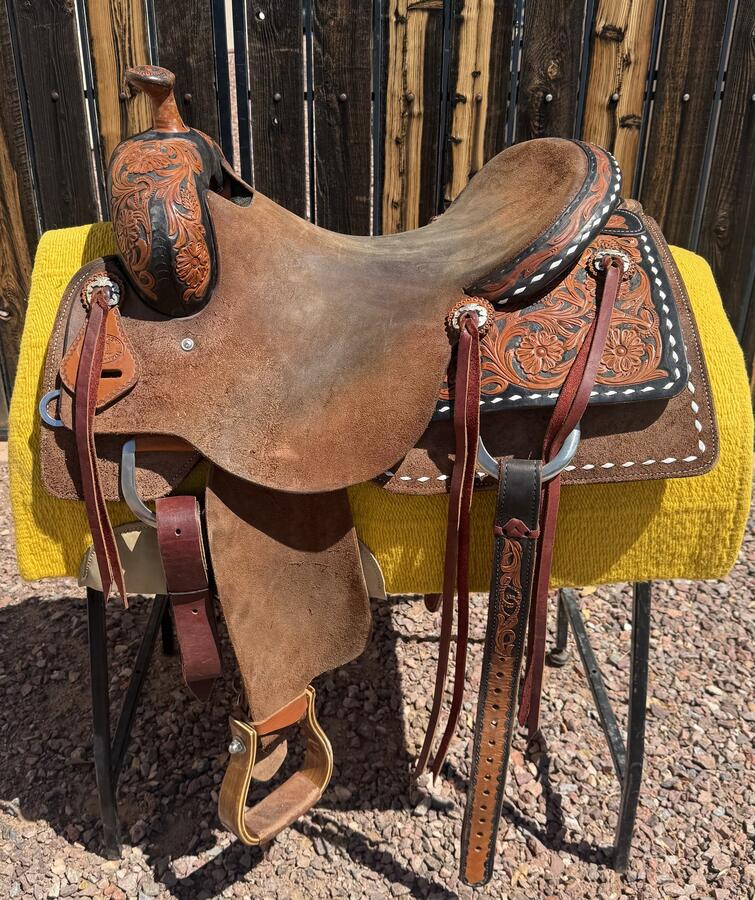
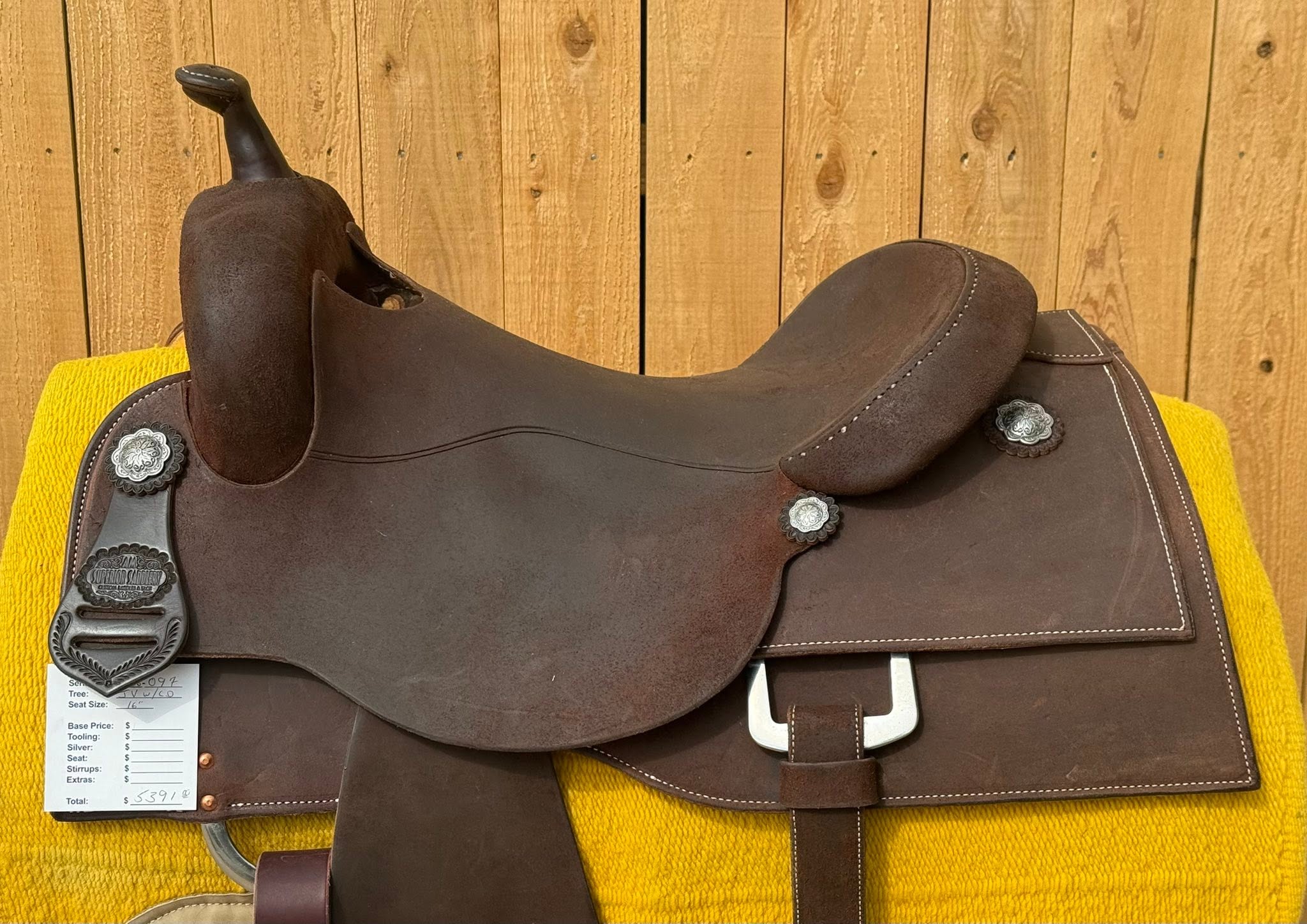
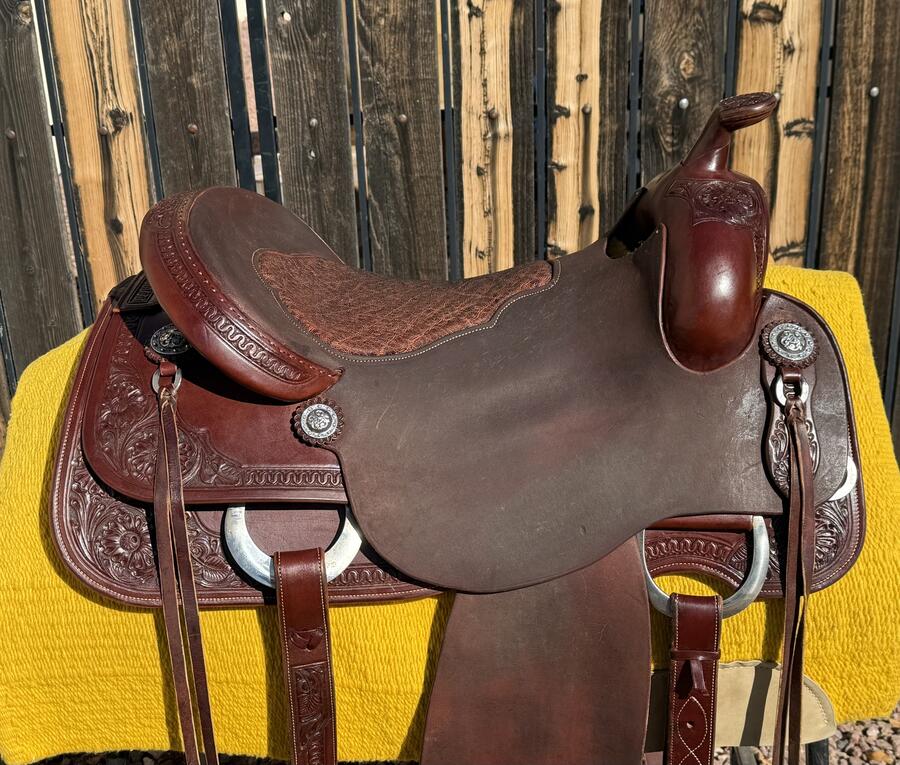
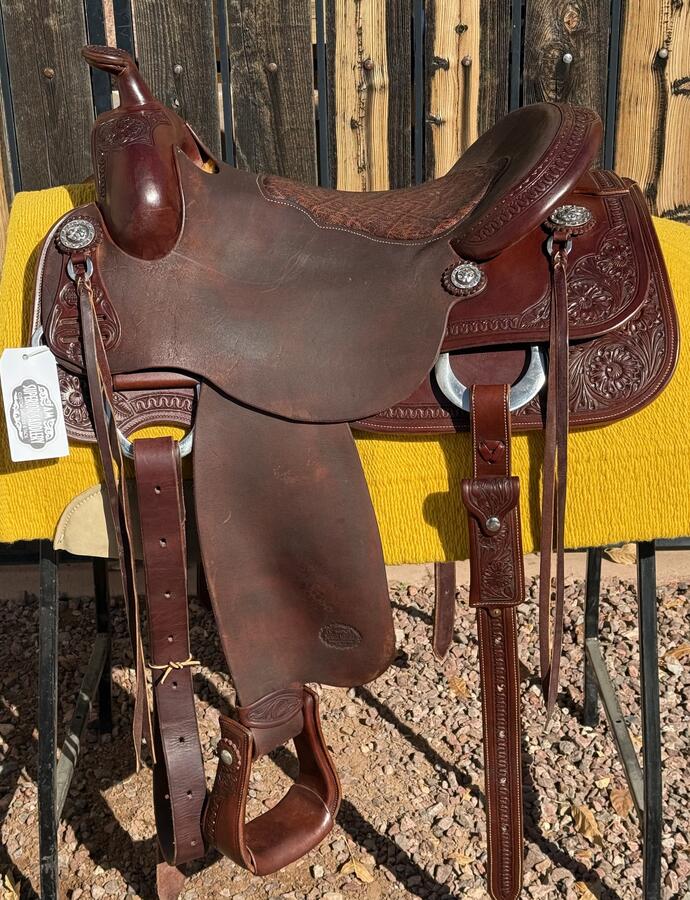
A competition ranch saddle is typically built on a ranch-cutter or roper tree with a moderate to semi-deep seat that keeps the rider in the long, vertical leg position judges reward. The horn is functional but slender — present and correct, not the stout working horn that would signal cattle country. The rigging is most commonly 7/8 or full double. The leather is unadorned or lightly tooled — basket stamp, floral, or smooth out — and the silhouette reads working ranch without looking like working ranch gear that has actually worked.
Within competition ranch saddles, style differs by class. Ranch Riding and Ranch Trail saddles favor a balanced seat and moderate cantle that allow easy posting and two-point at the lope. Ranch Cutting and Ranch Cow Work saddles borrow from cutting saddle geometry — flatter seat, forward-balanced stirrup, lower horn — so the rider stays centered on a working horse. Ranch Reining builds sit closer to a reining saddle, with a deeper seat that supports the stop. The class you are showing in should drive the geometry you buy — a knowledgeable dealer will always ask before recommending.
Superior Saddlery, Bob's Custom, and Martin Saddlery are among the makers with consistent records in AQHA ranch competition. Quality competition ranch saddles run $3,500 to $7,000 new. A clean used example from a respected maker in the $4,000 to $5,500 range represents genuine value for a serious AQHA exhibitor — provided it is the right style for your specific events.
Working Ranch Saddles: Built for Cattle, Not the Judge's Eye
A working ranch saddle starts from a completely different set of requirements. It needs to hold together through long days in rough country — roping and dragging calves, working cattle in tight corrals, covering ground in weather that no show venue ever sees. Function precedes finish. The tree must be strong enough to take rope pressure without flexing or cracking. The rigging must distribute that pressure correctly. The seat must be deep and secure enough to keep a rider on when a horse spooks or a calf hits the end of the rope at a run.
The back cinch is the clearest dividing line between a working ranch saddle and everything else. Working cowboys consider a back cinch non-negotiable for roping work — without it, rope pressure tips the saddle forward on the horse's back, putting stress on the wrong points of the tree and the wrong points of the horse. Competition saddles routinely omit the back cinch because it is not required in the show pen. A working ranch saddle without a back cinch is a show saddle in working clothing.
Rigging on a working ranch saddle is most commonly full double — both front and rear cinches taking load — because that distributes rope stress across the saddle correctly and prevents the forward tip that a single cinch cannot control under sustained pressure. The tree is typically a roper or ranch-cutter shape, built wide enough to fit the broad-backed ranch horses and ranch-bred quarter horses common on working outfits. Horn wraps, hobble straps, and rear dees for saddlebags or slickers are standard features, not options. Leather weight runs heavier than show saddles. Working cowboys do not prioritize pounds — they prioritize whether the equipment holds together when conditions deteriorate.
Regional tradition still shapes working ranch saddle preferences. Texas-style builds favor slick-fork trees, full double rigging, and moderate cantles — practical, no-nonsense, built for brush country and cattle work in tight spaces. Great Basin and California buckaroo builds favor swell-fork trees, center-fire or 7/8 rigging, and taller cantles — designed for the long days of open country riding where the horse and rider cover miles between working cattle. Both traditions produce excellent saddles for their intended environments. The tradition that fits your geography and your cattle work is the one worth buying.
The Tree: Where Both Types Live or Die
Whether you are buying a competition ranch saddle or a working ranch saddle, the tree is the component that determines the saddle's useful life and its value. Ranch saddles — especially working builds — absorb more sustained stress than any other western saddle type. Rope pressure, uneven terrain, heavy riders, and decades of use all load the tree in ways that a show saddle never experiences. A cracked, twisted, or repaired tree in a ranch saddle is not recoverable at a reasonable cost and should not be ridden.
Test any used ranch saddle by gripping the horn and cantle and applying opposing pressure — there should be zero flex or movement. Check the gullet channel from underneath for cracks running along the bars. Look at the rigging plates or in-skirt rigging area for any movement or separation from the tree. On a working saddle, examine the horn base for any cracking or loosening from rope stress — this is the single most common failure point on a hard-used ranch saddle. David physically inspects the tree on every saddle in his inventory before it is listed.
The Key Differences at a Glance
Competition and working ranch saddles share a visual language — plain leather, working silhouette, functional horn — but are built for fundamentally different purposes. Competition saddles prioritize correct show position, refined appearance, and the specific geometry that judges reward in each class. Working saddles prioritize structural strength, all-day security, roping capability, and the durability to absorb sustained hard use without failing. A competition saddle on a working ranch looks correct but may lack the back cinch, the rigging weight, and the horn strength for serious cattle work. A working saddle in the show pen does the job but may not position the rider the way a judge is scoring.
The honest question to ask before buying is straightforward: what is this saddle going to do most of the time? If the answer is show pen — buy for the show pen. If the answer is cattle work — buy for cattle work. David has been matching riders to the right ranch saddle for over 40 years, and that question is always the first one he asks.
Ranch Saddle Price Guide
| Price Range |
What to Expect |
| Under $1,500 |
Honest working ranch saddles from mid-tier production makers in functional condition. The SRS Ranch Saddle in David's inventory at $1,495 is a well-built example at this price point — fully rigged with back cinch, ready for cattle work. Good value for a working outfit that needs function over finish. |
| $1,500 – $3,500 |
Mid-range working and entry competition builds. Good condition working ranch saddles from quality regional makers, and entry-level AQHA competition ranch builds. Strong value range for a working ranch buyer or a rider stepping into AQHA Ranch events at the amateur level. |
| $3,500 – $5,500 |
Premium competition and high-end working builds. Superior Saddlery Ranch Rider models, Bob's Custom competition ranch builds, top-tier working saddles from respected Texas shops. The Superior Ranch Rider Deluxe and Nevada Border in David's inventory at $5,495 represent this range — AQHA competition quality with Superior's full craftsmanship. |
| $5,500+ |
Custom working saddles and top-end AQHA competition builds. Custom orders from makers like Dale Harwood or established Texas custom shops. Full silver packages on competition ranch builds. Saddles in this range are built to specification and hold value well on the used market when properly maintained. |