Cow Horse Knowledge
Understanding Cow Horse Saddles
The Three-Event Demand
The reined cow horse is the most athletically complete discipline in western performance sports. An NRCHA competitor asks their horse to perform a full reining pattern — large fast circles, small slow circles, flying lead changes, spins, and sliding stops — and then work a cow in two completely different phases: fence work, where the horse rates and mirrors a cow running the fence, and boxing, where the horse controls the cow in the center of the arena. All three phases happen in a single run, judged by separate panels, scored against separate standards.
No other western discipline demands that breadth from a single horse in a single go. And no other discipline puts more contradictory demands on a saddle. The reining phase wants a flat, balanced seat that lets the rider move freely through patterns. The fence and cow work phases want a more secure, deeper position with a horn that can be braced against when a horse drops and drives into a cow. A cutting saddle is wrong for the reining. A reining saddle is wrong for the cow work. The cow horse saddle is the engineered compromise between those two demands — and it is a more sophisticated piece of equipment than either of the saddles it bridges.
How the Design Solves the Problem
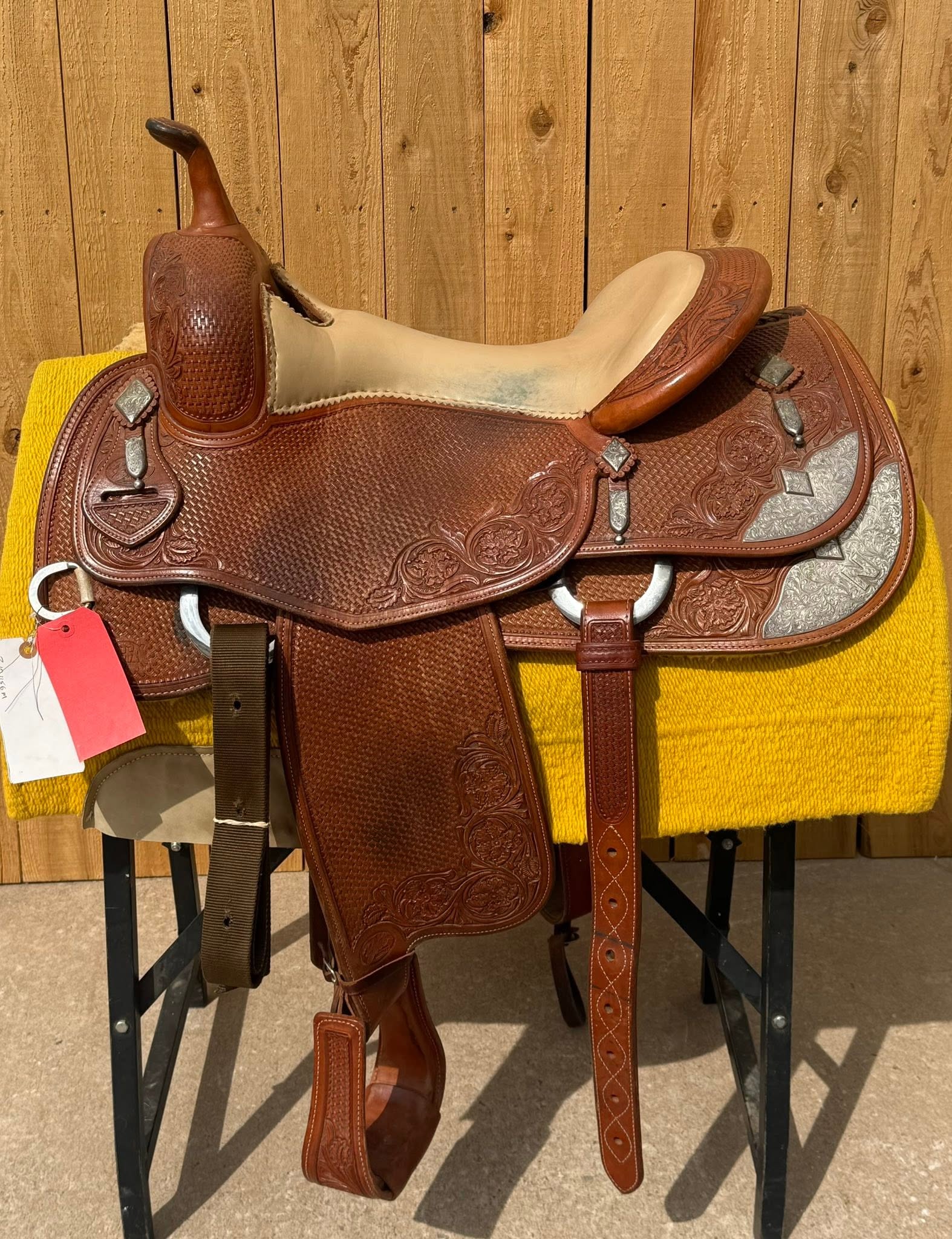
The seat of a cow horse saddle is slightly deeper than a reining saddle but flatter than a cutting saddle — a moderate dish that keeps the rider secure in the cow work without locking them in place during patterns. The cantle height sits between the two disciplines, providing more back support than a reining build while preserving the freedom of movement that pattern work requires.
The horn is more substantial than a reining horn — taller, with a wider cap — because cow horse riders do brace against it during fence work when a horse drives hard into a run. It is not a cutting horn, which is designed purely as a bracing post, but it is functional in a way that a reining horn is not. The rigging is typically 7/8 or full, distributing load across both a front and rear cinch, which matters when a horse is working a cow with the sustained drive and collection that fence work requires.
NRCHA vs. AQHA Ranch Cow Work
NRCHA competition and AQHA Ranch Cow Work are distinct events with different saddle implications. NRCHA competition demands the full three-event format at a high level of refinement, and the saddles used by serious NRCHA competitors reflect that — purpose-built crossover designs from makers who understand the specific demands of all three phases. AQHA Ranch Cow Work is a judged event within the ranch horse program that rewards a working appearance and practical cattle work rather than the refined athleticism of the NRCHA format.
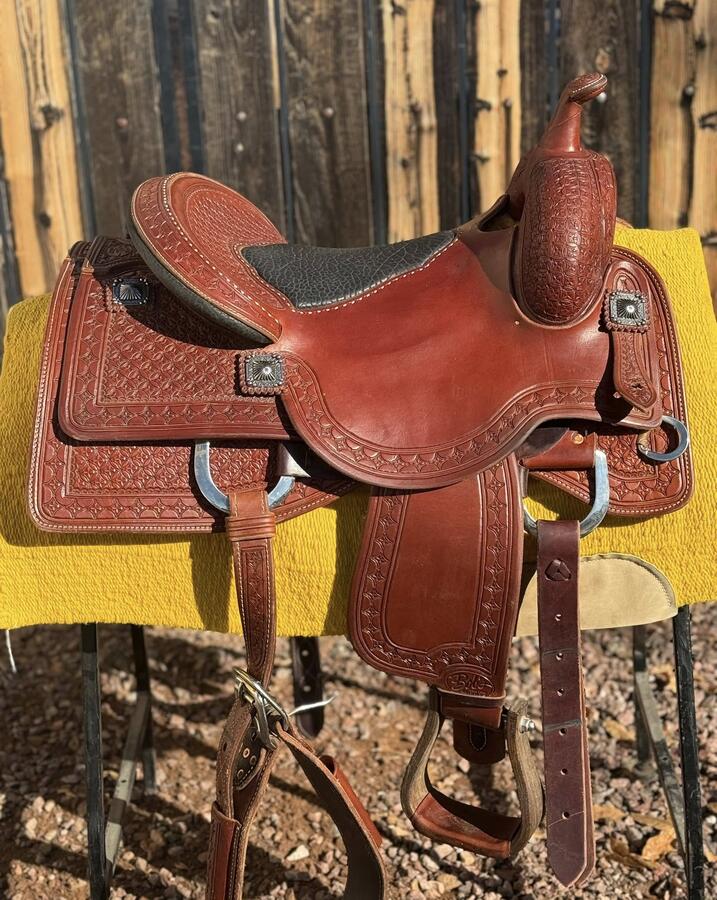
For NRCHA competition, a purpose-built cow horse saddle is not optional at the serious levels — the geometry matters too much. For AQHA Ranch Cow Work, a quality ranch saddle or crossover build will serve most competitors well. The saddles in David's cow horse inventory include Bob's Custom Lady Cowhorse builds.
Bob's Custom and the Lady Cowhorse
Bob's Custom builds the Lady Cowhorse model for cow horse competition.
David's current inventory includes new Lady Cowhorse builds.